The hidden hours SEN schools are losing (and how to get them back)
In many special educational needs (SEN) schools, a significant portion of staff time is spent outside the classroom guiding, escorting, and supervising learners as they move from one part of the school to another.For learners with visual impairments, autism, sensory processing differences, or intellectual disabilities, navigating complex corridors, unfamiliar layouts, and noisy circulation spaces can be overwhelming. As a result, transitions often require one-to-one adult support, even between short distances.
But as budgets tighten and staff capacity becomes stretched, the growing question across SEN leadership teams is: “How do we support independence during transitions while ensuring staff can spend more time inside the classroom — not outside it?”
Recent work at Orchard Hill College & Academy Trust offers a practical and encouraging answer.
THE HIDDEN COST OF TRANSITION SUPPORT
Occupational therapists at Orchard Hill shared a consistent challenge:
Many learners relied on adult support for every movement between classrooms, therapy rooms, dining halls, or outdoor areas.
Staff needed to physically guide them, describe locations, or help manage sensory overload.
Transitions often took longer than the lesson itself, reducing learning time.
For educators, this support is essential — but it creates unintended strain:
1. Fewer adults in the classroom :Every minute spent escorting a learner is a minute taken away from teaching, preparation, or small-group support.
2. Reduced learner independence : Learners become dependent on staff cues rather than developing the confidence to interpret space on their own.
3. Increased emotional load :Transitions can be stressful for both learners and staff, especially during peak times or noisy parts of the day.
Schools told us clearly:
“We need a way to make transitions easier, safer, and calmer — without relying on more adults.”
A NEW APPROACH TO GIVE BACK YOUR TIME : SENSORY WAYFINDING
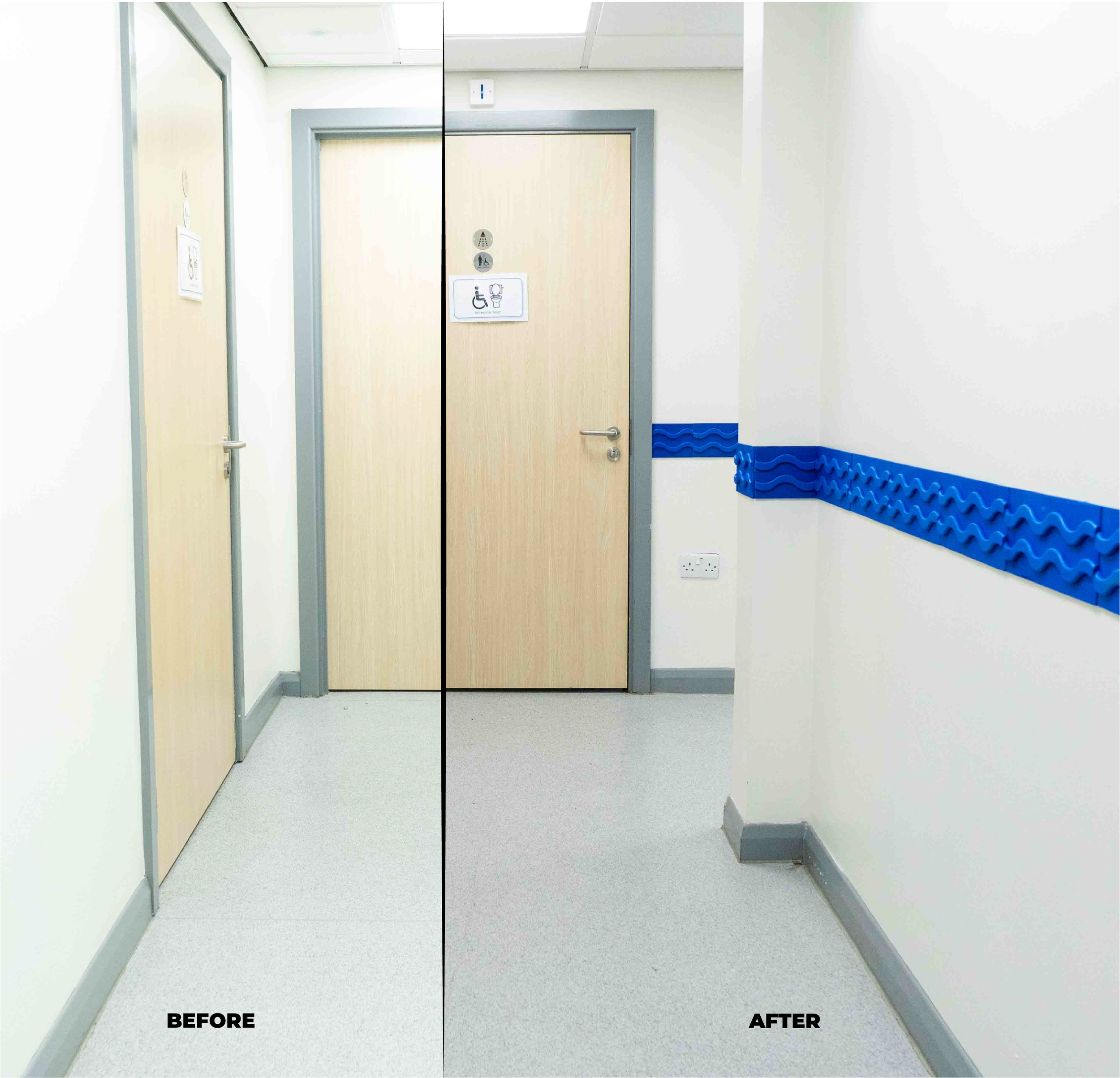
Working with Orchard Hill College, Sensei installed a sensory wayfinding system across two sites.
The goal was simple:
Use tactile and visual cues to help learners understand where they are, where they’re going, and what to expect next — without needing constant adult guidance.
The panels provide:
Tactile direction cues that can be followed by hand
Predictable textures that reduce anxiety
High-contrast visuals for low-vision learners
Consistent sensory language across classrooms, corridors, and shared spaces
The immediate impact surprised even us.
WHAT STAFF REPORTED AFTER INSTALLATION
Occupational therapists and teachers observed:
More independent transitions : Learners began following the tactile cues themselves, reducing the need for staff to physically lead them.
Calmer behaviour between sessions :Predictable, structured sensory cues reduced anxiety spikes during transitions — a major challenge for autistic learners.
Less reliance on verbal prompts :Instead of repeating instructions (“This way… turn left… slow down”), staff allowed the environment to prompt navigation naturally.
Staff time returned to the classroom : With less escorting and supervision needed, support staff spent more time:
assisting learning
preparing materials
focusing on small-group work
supporting therapy and interventions
This shift didn’t happen over months — it happened within weeks of installation.
WHAT THIS MEANS FOR LEARNERS :
This isn’t just an operational improvement — it’s an educational one.
Learners benefit through:
increased confidence
reduced dependence on adults
better emotional regulation
smoother transitions between lessons
more time engaged in learning
a sense of safety and autonomy
Every movement becomes a small step toward independence.
ESTIMATED STAFF TIME SAVED
While every school is different, early observations at Orchard Hill indicate:
A single staff member saves 15–25 minutes per transition-heavy hour
That equals approx. 1–2 hours per day of regained capacity
Over a term, this equates to dozens of hours redirected back into learning support
For multi-site trusts, the value multiplies quickly.
Want to see how this could work in your school?
Explore how other schools are reducing 1:1 transition support and building independence with sensory wayfinding.
Book a short planning call with our team →
or